
Social Media Guide for American Spaces
Contents


SOCIAL MEDIA CONTENT CREATION

INTRODUCTION
At the heart of this guide lies an understanding of the growing importance of effective social media communication in today’s ever-changing digital landscape. In an era characterized by nonstop connectivity, social media channels serve as powerful tools that offer valuable opportunities for American Spaces.
This guide focuses on key aspects of social media communication and provides American Spaces with actionable insights and practical approaches to navigate and succeed in this dynamic environment. Using this guide will assist American Spaces in fulfilling their mission.
Having a well-defined social media communication strategy is important for all organizations, including American Spaces. Through social media, American Spaces can broaden their reach and promote cultural exchange. They can engage with specific audiences in real time, gain valuable insights into audience behavior, and build meaningful relationships. This approach is both cost-effective and easy to measure, making it a valuable tool for American Spaces communication efforts.
This guide is designed for American Spaces coordinators, particularly staff of American Corners and Binational Centers. This guide may also be useful for American Center staff. However, Locally Employed staff of U.S. embassies or consulates should follow the social media guidance on the Bureau of Global Public Affairs internal Social Media Hub and direction from mission leadership.
The following sections of this guide outline the essential components of effective social media communication designed to address the needs of American Spaces.
SOCIAL MEDIA COMMUNICATION GOALS
Setting clear and actionable social media communication goals is the initial step in developing an effective social media strategy. The purpose of American Spaces social media communication is to align with their mission of connecting the world with the United States. As cultural and information centers, American Spaces provide free access for the public to learn about the U.S., develop skills, and explore resources. Social media extends this mission by creating an online space for engagement, collaboration, and inspiration.
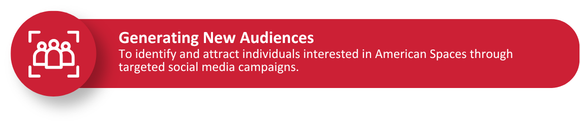
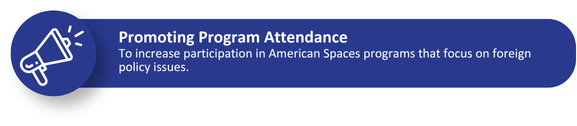
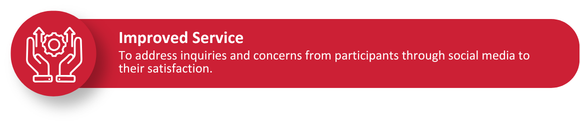
To achieve this, start by identifying specific social media goals relevant to your American Spaces’ needs and aspirations:

Best Practices for SMART Goal Setting
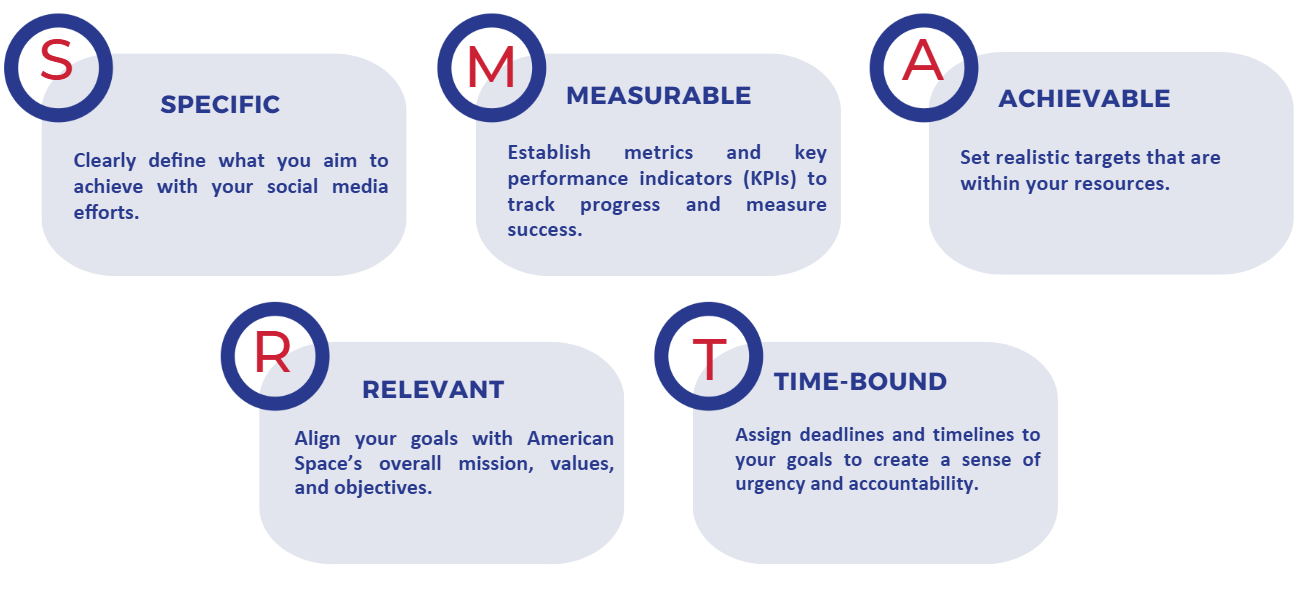
SMART
Make sure your goals are SMART: Specific, Measurable, Achievable, Relevant, and Time-bound. Here’s how to structure your goals effectively:
For example: By [timeframe], [audience] will [behavior], as evidenced by [outcome – key indicator].

A-F STRATEGIC PLANNING MODEL:
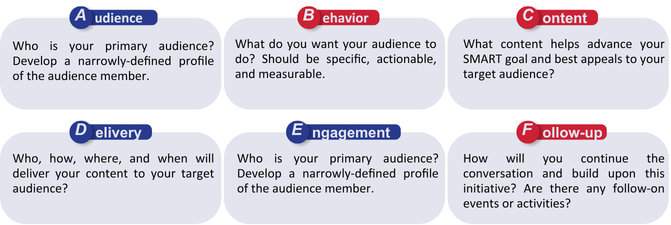
The A-F Strategic Planning Model offers a structured framework for planning a program or project within your American Space. Additionally, this model will assist you in integrating your efforts with social media communication. The A-F Strategic Planning Model translates your broad objective into an action plan that leads to specific and measurable outcomes.
Identify your administration foreign policy goals and strategic focus areas.
Then develop a SMART social media goal to help achieve the objective, using the following A-F model.
Objective: Promoting American Innovation and Entrepreneurship
SMART Goal: Increase follower engagement by 30% on posts related to American innovation, entrepreneurship, and technical education in the next two months.
SMART example: By the end of the current year, young adults aged 18-30 in urban areas will actively engage with American Spaces social media platforms, as evidenced by a 25% increase in follower growth, a 35% rise in meaningful interactions, including likes, comments, and shares, and a 20% increase in program registrations through social media channels.
Audience
The social media campaign may target young professionals and students, aged 18-30, who are interested in entrepreneurship, technical skills, and innovative solutions; educators and trainers seeking resources on American innovation; and community leaders promoting economic development.
Content
Content could include Instagram carousels featuring milestones in American innovation, X threads on technical education opportunities, and Facebook posts offering insights into the impact of entrepreneurship on U.S. history. Infographics and real-life stories of successful entrepreneurs could be shared to make the content both informative and easily shareable.
Engagement
Engagement could involve asking followers to share their startup ideas or inspirations. Interactive Instagram quizzes titled “Which American Invention Changed the World?” could encourage participation, and live Q&A sessions with innovation experts may be hosted on Facebook to further involve the community.
Behavior
The goal may be to drive engagement through likes, comments, and shares, and encourage participation in online learning events and interactive content like quizzes on American inventors and history.
Delivery
Posts may be shared on Instagram for carousels, X for concise updates, and Facebook for event promotion, with three posts per week. Relevant hashtags and opinion leader engagement may help expand reach.
Follow-up
Sustaining engagement could involve sharing highlights from the workshop or interactive events. To keep the conversation going, follow-up campaigns could be launched, such as “Innovation: Then and Now.”
By establishing clear objectives aligned with broader organizational goals, you can direct your efforts toward achieving tangible outcomes.
TARGET AUDIENCE ANALYSIS
With the variety of programs offered by American Spaces, you will need to engage with diverse audience segments. Hence, understanding target audiences is a crucial step in developing an effective social media strategy.
Collect data: To conduct in-depth audience analysis, start by collecting data from various sources, such as social media analytics, website analytics, and survey reports. Explore WeAreSocial to find out how audiences in your home countries are using social media. Look for statistics, such as internet and social media adoption rates, the main reasons for using social media, web traffic referrals from social media platforms, audience overlap across social media platforms, and more. Consider how you can use this information to enhance the social media performance of American Spaces.
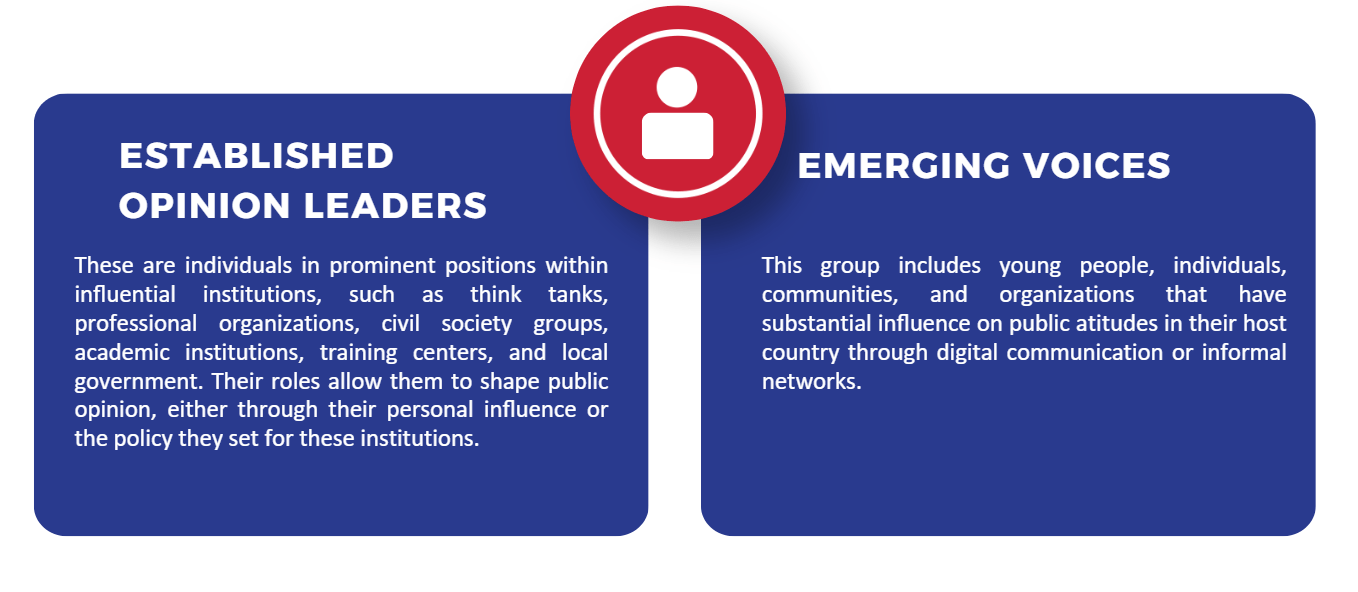
Understand your audience: Think about your audience in terms of who your existing audience is, who you could engage with, and who, specifically, you would like to engage with. The audience varies depending on the program, but American Spaces primarily aim to reach Emerging Voices and Established Opinion Leaders.
USE VARIOUS METHODOLOGIES FOR AUDIENCE ANALYSIS:
Employ various techniques, such as persona development and audience segmentation, to better understand your target audience.
USER PERSONA DEVELOPMENT:
User personas are generalized representations of your target audience. Developing detailed profiles will help you understand your audience better and create targeted and engaging content.
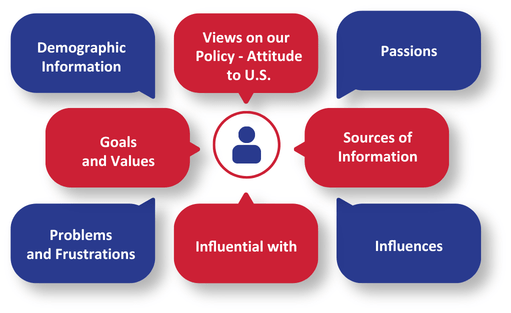
Each persona should represent a specific segment of your target audience and include key information, such as demographics, goals, values, passions, frustrations, sources of information, and other factors. You can also keep these personas in mind when developing new programs to help you achieve your goals.
You can use the references below to create a user persona:
AUDIENCE SEGMENTATION TECHNIQUE:
Audience segmentation involves dividing your broad audience into smaller, more manageable groups based on shared characteristics. This approach helps you develop more personalized strategies for each segment and enhances the effectiveness of your communication efforts. Audience segmentation techniques involve analyzing target audience based on the following characteristics:
- DEMOGRAPHIC CHARACTERISTICS: Age, sex, income, education, etc.
- GEOGRAPHIC CHARACTERISTICS: Country, region, city, climate, etc.
- PSYCHOGRAPHIC CHARACTERISTICS: Lifestyle, values, interests, personality, etc.
- BEHAVIORAL CHARACTERISTICS: User status, loyalty, engagement level, etc.
- Customize Messaging for Relevance and Resonance: Once you have identified your audience segments, the next step is to determine what actions you want your target audience to take as a result of the communication. Create personalized content that speaks directly to each audience segment.
Let’s say you want to reach students in your country who are interested in studying abroad and motivated by professional growth, academic success, and global experiences. They are tech-savvy and use social media platforms to research opportunities. A message like this would really grab their attention:

- Monitor audience feedback: Continuously monitor and analyze audience feedback and engagement metrics to stay informed of your audience’s evolving needs and preferences. Use social listening tools such as Google Trends, Google Alerts, and Answer the Public to track mentions, sentiment, and trends related to American Spaces.
SOCIAL MEDIA PLATFORM SELECTION AND MANAGEMENT
Choosing the right platforms to reach your target audience is key for maximizing American Spaces communication efforts. Since each social media platform has its own demographics, user behaviors, and platform features, tailoring American Spaces strategy to each platform will help boost engagement and impact. Here are several factors you need to consider when choosing social media channels.
REGIONAL POPULARITY TRENDS: Conduct thorough research and analysis to understand the social media landscape and the popularity of specific social media platforms in your target regions. A platform that works for one country may not work for another. Develop a platform selection strategy based on the platforms that are widely used in your country.

On DataReportal, you can find the data, insights, and trends you need to make better-informed decisions. Go to the website and search for your country and the year for the necessary data. Gather information, such as platform adoption, user growth rates, and audience age and sex distribution. This information can guide you in determining which platforms are worth focusing on.
AUDIENCE PREFERENCES: Consider the preferences and behaviors of your target audience when selecting social media platforms. Choose platforms where your audience is most active and engaged.
IMAGE AND POSITIONING: Consider the American Spaces’ overall image and messaging consistency across different platforms. Ensure that the selected platforms align with your organization’s identity and communication style.
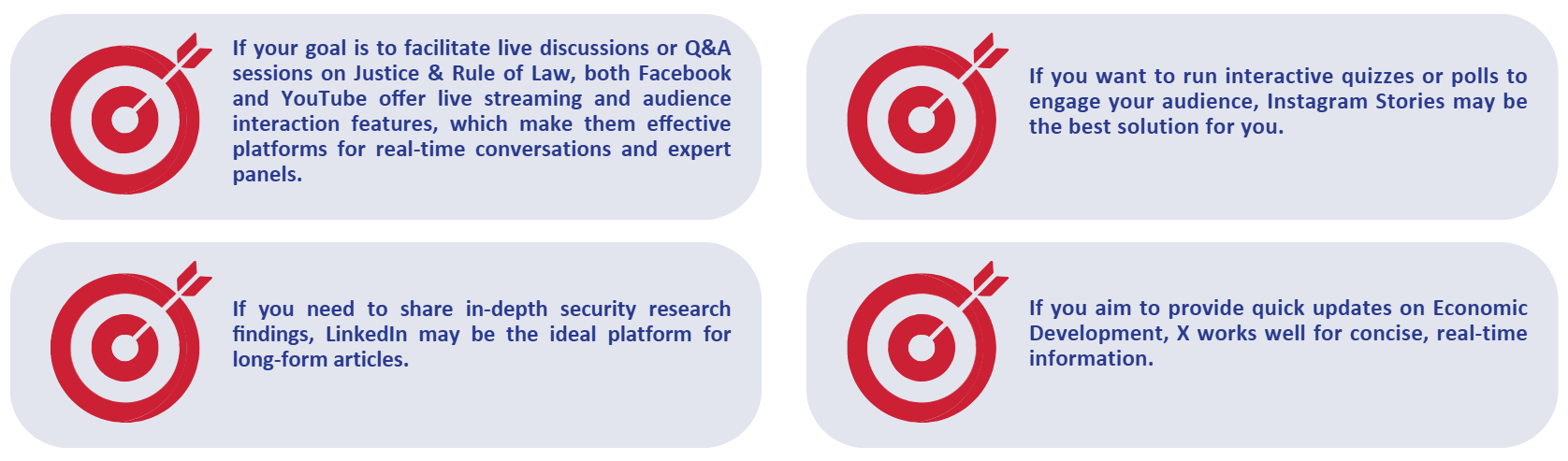
PLATFORM FEATURES: Evaluate the features and capabilities of various platforms. Choose platforms that offer the functionality you need to achieve your communication objectives.
For instance:
EMERGING TRENDS: Keep track of emerging social media platforms and trends. Adjust your platform selection strategy accordingly.
CONSOLIDATE PLATFORMS: Finally, consider the resources available for managing and maintaining multiple social media accounts effectively. Remember, quality matters over quantity. Regularly evaluate your social media properties and phase out accounts that are no longer serving a strategic purpose. When possible, work with your U.S. embassy or consulate to consolidate American Spaces social media accounts and platforms within a community, country, or region. This can maximize staff time and present a unified message. Archive accounts that:
- No longer reach your target audience;
- Do not publish regular content and/or have not published content in the past month; and
- Are on platforms that are no longer used widely in your country or community.
When archiving accounts, be sure to:
- Notify your followers in advance.
- Archive the account and retain the records.
- Clearly mark the account as inactive. Do not delete the account, which could lead to account impersonation or audience confusion.
ACCOUNT SECURITY
There are several steps you must take to decrease your chances of being affected by account security issues.
- Use strong passwords.
- Do not use the same passwords for multiple social media accounts.
- Share usernames and passwords only with authorized staff and the members of your social media backup team.
- USE MULTI-FACTOR AUTHENTICATION: When multi-factor authentication is enabled for an account, the user is required to enter an additional piece of information besides a password to log in, usually a short numeric code that can only be used once. Multi-factor authentication should be used whenever available.
- Use app-based multi-factor authentication services. Although authentication apps such as Google Authenticator can still be vulnerable to phishing attacks, they offer more protection than text or email message-based authentication.
- Some social media platforms, including X, YouTube, and Instagram, should be administered via a shared email address. In those cases, only one person should generate a QR code for an account. To allow other team members to access the account, the person who enables the multi-factor authentication settings in the account settings should screenshot the QR code and put it in a document shared with their team. The additional team members should scan the QR code in the document with their authenticator app.
- For Facebook, do not create fake, shared, or second work profiles to manage Facebook pages. These kinds of profiles violate Meta terms of service. Meta AI will flag these profiles and disable them. You then may be locked out of the profile and the Facebook page administered by the profile.
- Facebook page administrators should use their real, personal Facebook accounts. Personal profiles will never be publicly tied to your public Facebook page; the profile’s role will only be visible to other page managers. For further security, we recommend securing your personal profile’s privacy settings and checking that the email account connected to your Facebook account is up to date and accessible by you.
SOCIAL MEDIA CONTENT STRATEGY
A well-defined content strategy is not only about posting frequently but also about creating meaningful interactions and driving engagement. Here is what you need to consider:
CONDUCT A CONTENT AUDIT: Evaluate the effectiveness of your past social media communication practice. Identify which types of content performed well and which did not. Use social media analytics tools, such as Facebook Insights, Instagram Insights, LinkedIn Analytics, X Analytics, etc., to monitor performance metrics. Track key metrics such as reach, impressions, engagement rate, click-through rate, and follower growth.
DEFINE CONTENT THEMES AND COMMUNICATION TOPICS: Determine what content is missing or underrepresented in your communication. Look for opportunities to address new topics that will interest your audience and help you achieve your communication goals. Diversify your content to include a mix of promotional, educational, entertaining, and informative content to keep your audience engaged.
DETERMINE WHICH TYPE OF CONTENT IS BEST TO USE:
- Informative Content: These are your everyday posts that keep your social media active and relevant. They include regular updates, news, and information that engage your audience. This type of content is essential for maintaining online visibility.
- Evergreen Content: This content focuses on the central themes and key messages of your American Spaces. It aligns with your long-term objectives and reflects your core identity. Evergreen content helps to build and nurture your audience.
- Testimonial Content: This type of content is designed to create a big impact and drive high engagement. It often includes major campaigns, events, or viral content that capture attention and inspire action. This content often highlights first-person stories of visitors who experienced significant positive change as a result of American Spaces programs and resources.
DEVELOP A CONTENT CALENDAR: Include posts related to holidays, current events, and seasonal trends. Maintain a balance between the frequency and quality of your content to avoid overwhelming your audience. Also, monitor your posts’ performance to determine the best times to share them.
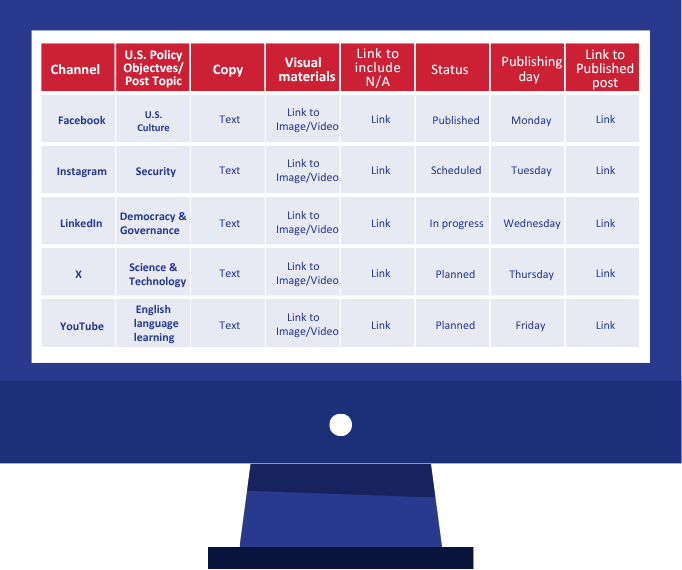
CHOOSE YOUR CONTENT FORMAT: Determine the most effective content formats for conveying your messages. These could include images, videos, blog posts, infographics, podcasts, and interactive content like quizzes or polls, etc. Customize your content for each social media platform, considering its unique features and audience demographics.
DEFINE TONE OF VOICE: Develop a consistent tone of voice that reflects American Spaces’ personality and values: Approachable, informative, and culturally sensitive.
CREATE VALUABLE CONTENT: Write clear, concise, and compelling captions. Use storytelling techniques to make your content more engaging and relatable. Use attention-grabbing headlines and strong calls-to-action (CTAs). Share high-quality images and videos and maintain consistent branding in terms of colors, fonts, and style. Explore and use relevant hashtags to increase your visibility.
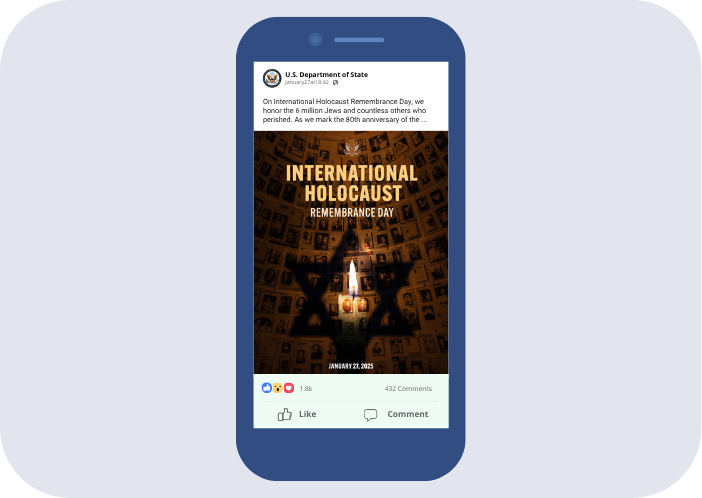
AMPLIFY US EMBASSY CONTENT/DOS CONTENT: Follow official social media accounts of your local U.S. embassy, consulate, and relevant Department of State entities, and amplify their content by sharing, retweeting, liking, and engaging with their posts to extend reach and impact.
USE THEIR HASHTAGS: Incorporate hashtags used by U.S. embassies, consulates, or other DOS entities in your posts to join broader conversations and increase the visibility of shared content. Use #AmericanSpaces when possible.
TAG OFFICIAL ACCOUNTS: When posting related content, tag the official embassy, consulate, or DOS accounts. This not only acknowledges the source but also increases the chances of your post being noticed and potentially reshared by these accounts.
CONNECT WITH SOCIAL MEDIA MANAGERS: Connect with the social media manager at your U.S. embassy/consulate.
JOIN THEIR CAMPAIGNS: Coordinate with the embassy or consulate on joint social media campaigns. This can include sharing information about events, initiatives, or programs that are relevant to both your audiences.
Here is how you can amplify U.S. Embassy/Consulate/DOS content.
Here are some accessibility recommendations to apply in your social media communication:
USE ALTERNATIVE TEXT FOR IMAGES: Alternative text (alt text) provides a textual description of images for screen readers. When posting images on social media, include a brief but descriptive alt text. This ensures that visually impaired users can understand the content of the images.
ADD CAPTIONS AND TRANSCRIPTS FOR VIDEOS: Captions are textual representations of the spoken content in videos, while transcripts provide a full-text version of the audio. Captions and transcripts make videos accessible to hard-of-hearing users and those who prefer reading over watching.
ENSURE TEXT READABILITY: Clear and readable text benefits everyone, especially those with cognitive disabilities or visual impairments. Use simple language, large fonts, and high-contrast colors, and avoid overly decorative fonts. Incorporate headings, lists, and other structural elements to make content easy to navigate for users with disabilities, including those using screen readers, who rely on clear navigation cues.
Check your content against Section 508 Standards.
ENSURE THE PRIVACY OF PROGRAM PARTICIPANTS: Obtaining permission to use photos or videos of program participants is crucial for American Spaces to respect privacy rights and ensure successful visual diplomacy by complying with legal and ethical standards.
Each country may have specific legal requirements. American Corners and Binational Centers should consult with the local U.S. embassy or consulate about consent policies, especially for minors and privacy-sensitive situations. Additionally, the Managing American Spaces website includes standard Video/Photo Release forms — one for adults and one to be signed by legal guardians on behalf of minors.
Clearly display your photo release policies and announce photography or videography plans before any program begins. Read the American Spaces Handbook for more information.
MONITOR AND ANALYZE PERFORMANCE: Use monitoring tools such as Facebook Insights, Instagram Insights, LinkedIn Analytics, X Analytics, etc., and track key social media metrics for more comprehensive analytics. Adjust your content strategy based on what is working and what is not.
ENGAGEMENT STRATEGY
In today’s overwhelming digital landscape, having a well-defined social media engagement strategy is essential. American Spaces need to ensure that these strategies align with offline engagement, especially through programs held at American Spaces. Here are some recommendations to help you generate meaningful engagement:
MONITOR CONVERSATIONS: Use tools, such as Google Alerts, to monitor mentions, hashtags, and keywords relevant to American Spaces. Stay updated on conversations and trends within your community to identify opportunities for engagement or address emerging issues proactively.
BE PROACTIVE: Start discussions on relevant topics to encourage interaction and engagement. Pose thought-provoking questions and encourage dialogue among your followers. Use polls and surveys to gather feedback, opinions, and preferences from your audience. Host live Q&A sessions, webinars, or virtual events to engage with your audience in real-time.
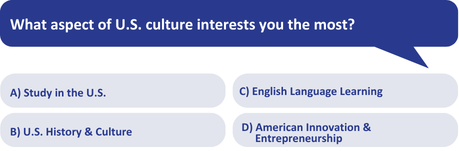
ENGAGE WITH YOUR AUDIENCE: Respond to comments, messages, and feedback promptly to demonstrate an interest and care. Respond empathetically to criticism or complaints, acknowledge concerns, and offer solutions or assistance publicly or via direct messages.
USE ENGAGEMENT AUTOMATION: Consider using chatbot platforms, such as Chatfuel and ManyChat, to handle routine inquiries or frequently asked questions and free up time for personalized engagement with followers. Set automated replies for common queries or greetings to acknowledge messages and provide immediate assistance, even outside regular working hours.
FOSTER ENGAGEMENT INSIDE PHYSICAL AMERICAN SPACES: To foster audience engagement with social media inside physical American Spaces, create memorable and shareable experiences that encourage visitors to amplify their in-person experiences online. Create photo opportunities like cardboard cutouts, thematic backgrounds at events, and interactive photo booths to make the spaces visually appealing and fun. Encourage visitors to take photos and share them on social media using specific hashtags and tagging #American Spaces.
ENCOURAGE USER-GENERATED CONTENT (UGC):
Prompt followers to share their experiences, photos, or testimonials related to American Spaces. Acknowledge individuals who create and share UGC by reposting their content or featuring them in stories to highlight community contributions and foster a sense of belonging.

COLLABORATE WITH INFLUENCERS AND AMERICAN SPACES’ AMBASSADORS:
Collaborate with relevant social media influencers or American Spaces ambassadors to amplify your engagement efforts and reach a broader audience. Involve them in content creation or campaign planning by seeking their input, ideas, or contributions.
FOLLOW-UP:
Create a Facebook or WhatsApp group to help American Spaces program participants stay connected. Inform your audience of future events and opportunities in your American Space. Groups may take considerable effort to manage, so create a content plan and decide who will be responsible for managing the group in advance.


ESTABLISH COMMUNITY GUIDELINES:
Establish clear guidelines for community behavior and interaction to maintain a positive and respectful online environment. Clearly outline community guidelines in your respect, constructive dialogue, and adherence to platform policies. Monitor interactions and take appropriate action with those who violate community standards. See an example Terms of Use document at https://www.state.gov/social-media-terms-of-use.
ANALYZE ENGAGEMENT:
Regularly monitor feedback from your audience on their engagement experience and preferences to identify areas for improvement and refinement. Track key metrics such as likes, comments, shares, and mentions to assess the effectiveness of your engagement efforts. Do not be afraid to experiment with new engagement tactics or approaches based on emerging trends or audience feedback.
MONITORING AND ANALYTICS
Feedback monitoring and analysis allow American Spaces to gather valuable insights from their audience and adapt and improve their communication strategies accordingly. Here are some key considerations:
MONITOR COMMENTS, MESSAGES AND MENTIONS: Regularly monitor comments, direct messages, and mentions across your social media channels to stay informed about what your audience is saying about American Spaces.
ANALYZE SENTIMENTS: Invest in social media listening tools to track conversations about your American Spaces across social media platforms. These tools can help you identify trends, sentiment, and emerging topics relevant to your audience, so you can adapt American Spaces’ content and communication strategies accordingly.
Here are some useful tools offering plenty of free features:
GOOGLE ALERTS: This platform identifies new content, trends, and conversations about your organization. It sends automatic email notifications once a result matches the searched keyword.
ANSWER THE PUBLIC: A Social listening tool with 3 free daily searches. It offers a great opportunity to explore your audiences’ questions and issues of interest. Type a relevant keyword and reveal all the questions that the public asks on the internet (how, where, what, when).
GOOGLE TRENDS: A tool for tracking the popularity of search queries over time, identifying trending topics, and exploring related search queries.
UTILIZE POLLS AND SURVEYS: Engage your audience by conducting polls and surveys on social media platforms to gather feedback on various topics, including content preferences, interests, and satisfaction with your programs. Use the insights gathered to refine your content and communication strategies.
DEFINE SOCIAL MEDIA METRICS AND KEY PERFORMANCE INDICATORS (KPIs): Determine relevant social media metrics and KPIs based on American Spaces goals and objectives. Establish benchmarks and regularly assess performance against these metrics to measure the effectiveness of your social media efforts.
Social media metrics are points of data essential to tracking the performance of your social channels, content, and strategy.
Here are some important social media metrics for American Spaces to track:
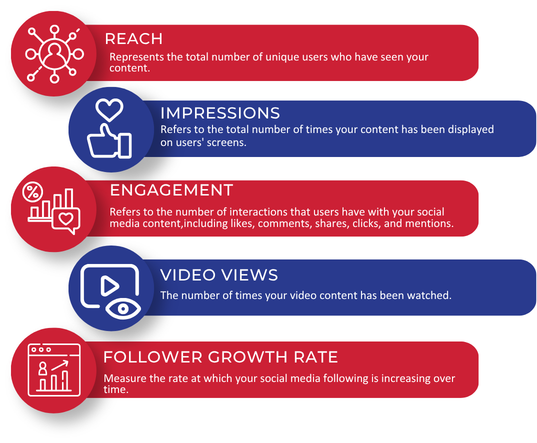
The choice of metrics to monitor can vary from one project to another. However, it is essential for American Spaces to consistently track Reach, Impressions, Engagement, and Follower Growth Rate.
ANALYZE INSIGHTS: Regularly analyze data gathered from monitoring and analytics efforts to identify patterns, trends, and areas for improvement. Look for correlations between social media activities and key performance metrics to gain insights into what works best and what drives engagement.
STAY INFORMED ABOUT TRENDS: Monitor social media industry trends and developments on platforms to stay updated. Keep informed about new features, algorithm changes, and emerging best practices to ensure your strategies remain relevant and effective.
REFINE COMMUNICATION STRATEGIES: Use the insights gained from monitoring and analytics to refine your communication strategies. Continuously experiment with different approaches (change content types, formats, posting schedule, and timing, etc.) and measure their impact to optimize your social media performance over time.
REGULAR REPORTING: Establish a routine for generating and sharing comprehensive social media reports with key staff on a regular basis. Ensure that the reports highlight actionable insights.
CRISIS MANAGEMENT PLAN
In the fast-paced world of social media, crises can arise unexpectedly, and how American Spaces respond can significantly impact their reputation and credibility.
Here are some recommendations:
CREATE A BACKUP TEAM: Clearly identify backup account managers before a crisis arises. Ensure a team of several staff members have a list of the American Space’s active social media accounts and their usernames and passwords. These staff should be able to access the accounts remotely, including from home or abroad, on both desktop and mobile devices, during a crisis. American Corners and Binational Centers should consider including an embassy or consulate staff member on the backup team. Test access and review the backup plan regularly, such as at annual workshops for American Spaces staff. If a crisis arises, check with embassy and consulate staff about messaging posture and follow their guidance for pausing posts and scheduled content as appropriate.
BE PREPARED: Continuously monitor social media channels for any signs of a potential crisis. To minimize risks, ensure that all content adheres to established guidelines before publication. Additionally, develop predefined response templates for common crisis scenarios. Potential crises for American Spaces may include, but are not limited to:
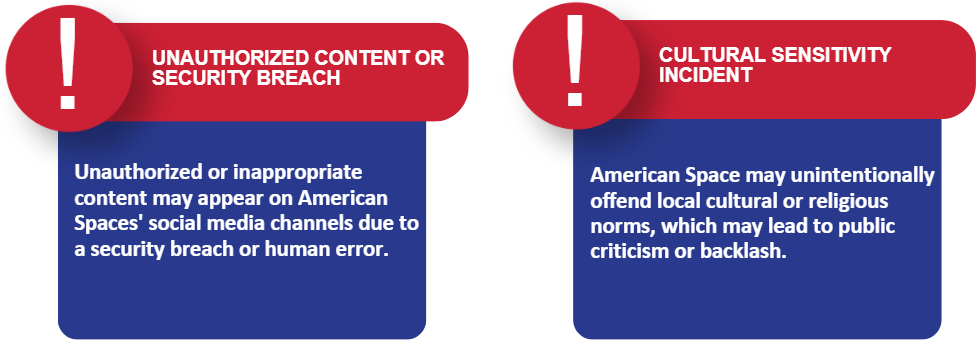
ADDRESS THE CRISIS: When a crisis arises, quickly assess the situation by collecting relevant information to understand its scope and impact. Report your findings to the embassy or consulate as necessary. Cancel any pre-scheduled content. If the crisis involves unauthorized content or a security breach, take immediate action to secure accounts by changing passwords and reviewing access permissions. Develop a clear action plan and assign roles within your team for effective crisis communication. Engage with affected parties directly, provide culturally sensitive and timely responses while keeping your audience updated on the situation and the steps being taken to resolve it.
LEARN FROM LESSONS: After the crisis is resolved, review the incident to identify gaps and areas for improvement. Document the crisis management process for future reference and training to enhance readiness for potential crises.

SOCIAL MEDIA CONTENT TYPES
When choosing from the various content types, it is important to consider the following recommendations:
CONSIDER PLATFORM CAPABILITIES: Take into account the unique features and capabilities of each social media platform when selecting content types. Optimize your content for specific platforms to maximize engagement, visibility, and shareability.
FOCUS ON QUALITY OVER QUANTITY: Prioritize quality content that provides value to your audience over simply sharing posts. Invest time and resources into creating high-quality, relevant, and compelling content that aligns with your objectives.
DIVERSIFY CONTENT FORMATS: Experiment with different content formats to keep your audience engaged. Mix up text-based posts, images, videos, infographics, and interactive experiences to provide variety and capture attention.

IMAGES
Images can convey messages quickly and effectively, capturing the audience’s attention as they scroll through their feeds. High-quality images can enhance American Spaces’ identity, evoke emotions, and drive engagement.
VIDEOS
From short clips to longer explainer videos, this content format allows for storytelling, demonstrations, tutorials, and more. Videos have the power to entertain, educate, and inspire, which makes them invaluable tools for American Spaces.


STORIES
Stories allow American Spaces to share content that disappears after 24 hours, creating a sense of urgency and exclusivity. Stories are ideal for sharing behind- the-scenes content, or quick updates in a casual and authentic manner.
TEXT POSTS
While often overshadowed by visual content, text-based posts can still be used for sharing updates, conveying important information, asking questions, or sharing quotes and insights.
USER-GENERATED CONTENT (UGC)
UGC includes reviews, testimonials, photos, videos, and other content shared by your program participants and followers. Leveraging UGC can build trust, authenticity, and credibility with the audience, as well as encourage community participation and engagement.
LIVE STREAMS
Live streaming allows organizations to connect with their audience in real-time, provide behind-the-scenes glimpses, hold Q&A sessions, and host live events. It fosters a deeper connection with followers and drives engagement. American Spaces may engage in simulcasting interesting videos with partners.


PODCASTS
American Spaces can create podcasts to share industry insights, interviews with experts, or discussions on relevant topics, and provide valuable content to their audience in a convenient format.
WEBINARS AND LIVE WORKSHOPS
Webinars and live workshops allow American Spaces to host interactive sessions with their audience. These events can provide in-depth education, training, or discussions on priority themes.


E-BOOKS
Through social media, American Spaces can also promote eLibraryUSA, which is designed to give users worldwide access to American history, literature, and other subjects to enhance learning and research.
INFOGRAPHICS
Infographics are ideal for sharing statistics, research findings, and step-by-step guides. They are highly shareable and can significantly increase American Spaces’ visibility.
INTERACTIVE CONTENT
Interactive content includes polls, quizzes, contests, and surveys. These formats foster two-way communication, encourage participation, drive higher levels of engagement, and gather valuable insights.
INTERACTIVE EXPERIENCES
Beyond polls and quizzes, American Spaces can create more immersive interactive experiences such as virtual tours, interactive games, or augmented reality (AR) filters. These experiences not only engage the audience but also leave a lasting impression and encourage social sharing.
COPYWRITING
Writing compelling social media copy is more than just putting words together. It is about strategically capturing audience attention, sparking engagement, and driving desired action. Here are some practical tips for writing effective copy:
UNDERSTAND YOUR AUDIENCE: Before writing copy, it’s important to understand your target audience’s preferences, interests, and behaviors. Customize your messaging to resonate with different audience segments and evoke the desired response.
WRITE ATTENTION-GRABBING HEADLINES: Headlines are the first thing users see, so make them engaging and compelling. Use powerful words, ask questions, or provoke curiosity to encourage users to click and engage with your content.
For example:
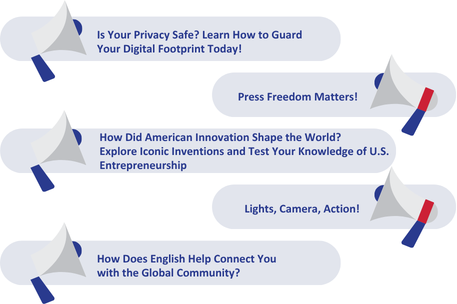
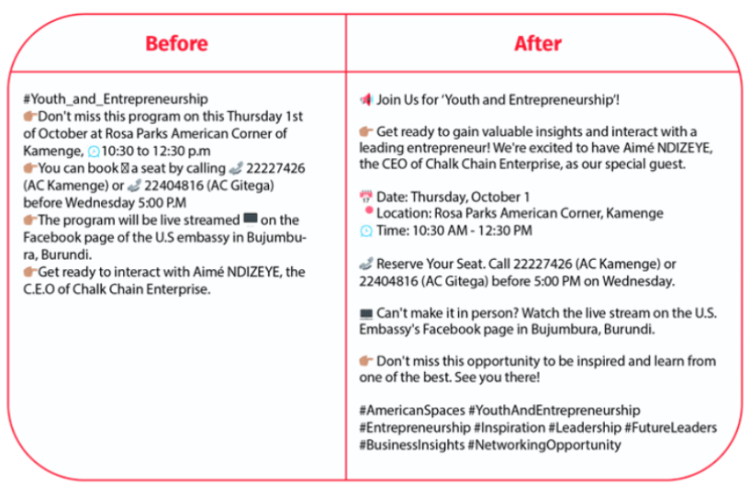
WRITE ENGAGING CAPTIONS: Captions accompanying your social media posts provide context and additional information. Write captions that complement your visuals, arouse curiosity, and encourage users to engage with your content. Clearly communicate your key messages in a concise and compelling manner. Use emojis, hashtags, and relevant keywords to increase visibility and engagement.
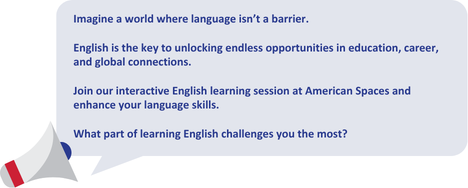
STORYTELLING: Use storytelling techniques to make your content more engaging and memorable. Share personal stories or experiences to build a connection with your audience. Highlight program participants’ testimonials or success stories to add authenticity.
VISUAL DIPLOMACY: Use photography and visuals to communicate, capture and visually tell the story of activities held in American Spaces. Great photos share one or more of these three elements:
- Action: Images showing your audience actively engaged in completing a task or achieving an outcome.
- Engagement: Photos showing your audience interacting with each other or with a speaker, whether through activities or other forms of interactions.
- Emotion: Photos capturing the positive emotions experienced in American Spaces, highlighting the emotional impact of the events or activities.
Ask yourself some of these questions:
What is taking place in the picture?
Do your viewers see what you see?
Is the message clear without words?
Does it reflect the important work you are doing?
Whenever possible, include the U.S. flag and American Spaces logo in the background or as a prominent element. Examples include flags hung from staffs, table flags, flag pins, and flags/logos on printed banners.
INCLUDE SOCIAL PROOF: Integrate social proof elements such as reviews and testimonials into your copy to build credibility and trust with your audience. Highlight positive experiences and feedback from satisfied program participants to validate your claims and offerings.
EFFECTIVE CALL-TO-ACTION (CTAs): Every piece of copy should include a clear and direct call-to-action that prompts the audience to take the desired action. Whether it’s “Learn More” or “Sign Up,” CTAs should be action-oriented and aligned with your campaign objectives. Create a sense of urgency with phrases like “Limited Time” or “Act Now.” Position CTAs prominently within your content.
MAINTAIN CONSISTENT VOICE: Ensure consistency in tone, language, and messaging. While maintaining consistency, adapt your tone slightly depending on the platform.
OPTIMIZE FOR EACH PLATFORM: Customize your copywriting style and length to suit the specific requirements and nuances of each social media platform. What works on X may not work on LinkedIn or Instagram, so customize your approach accordingly.
MONITOR FEEDBACK: Actively monitor comments, messages, and mentions on your social media posts, and adapt your writing style accordingly.
Considering these recommendations, the social media communication of American Spaces can be enhanced as follows:
HASHTAGS #
Hashtags play an integral role in navigating the vast amount of social media content available in today’s digital landscape. They enable users to explore trending topics, join conversations, and connect with like-minded individuals across the globe. Here are some tips on how to use the power of hashtags:
RESEARCH TRENDING HASHTAGS: Start by conducting thorough research to identify trending hashtags relevant to your target audience. Utilize tools like Hashtagify or platform insights to discover popular hashtags in real time.
EXPLORE SOCIAL MEDIA HASHTAGS FOR AMERICAN SPACES: Avoid using overly long or inactive hashtags. Instead, visit the American Spaces website to discover hashtags organized by key pillars and priorities. Align relevant hashtags with your programs and activities.
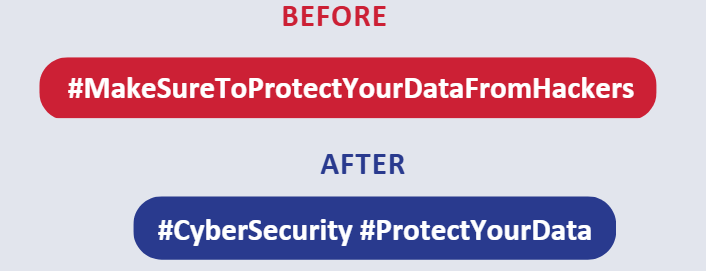
SELECT RELEVANT HASHTAGS: Choose hashtags that are not only trending but also relevant to your content and target audience. Strike a balance between popular, broad hashtags and niche, specific ones to reach a wider audience while maintaining relevance.
AVOID OVERUSE: While hashtags can boost content visibility, excessive use may appear spammy or unprofessional. Limit the number of hashtags in each post to maintain readability and authenticity.
SOCIAL MEDIA DESIGN GUIDELINES
Creating visually appealing design content for social media is vitally important for capturing audience attention and fostering engagement. Recommendations for applying graphic design principles to social media visuals include:
SIMPLICITY: Keep designs uncluttered by focusing on essential elements. Avoid overcrowding with too much text or too many images. Ensure that the main message is easily understandable at a glance.
VISUAL HIERARCHY: Create a clear visual hierarchy to guide viewers’ eyes to the most important elements first. Use contrast to highlight key information and create a visually engaging experience.
BALANCED LAYOUT: Use symmetrical layouts for a clean and organized look and asymmetrical layouts for a dynamic and interesting design. Incorporate white space to prevent it from looking cluttered.
PLATFORM OPTIMIZED CONTENT: Ensure that all designs meet the specific size and format requirements of each social media platform. Make designs with mobile users in mind, ensuring that visuals look good on smaller screens.
HIGH-QUALITY IMAGES & VIDEOS: Use high-resolution images to avoid pixelation. Source high-quality images from reputable stock photo-video websites.
CONSISTENT BRANDING: Always follow the U.S. Department of State Brand System and the Brand Guidelines of American Spaces to reinforce your organization’s visual identity. Develop and use design templates for recurring content types to maintain a cohesive look. Place the U.S. flag and the American Spaces logo consistently on all graphics to enhance recognition. Stick to your brand’s color palette and typography to maintain visual consistency.
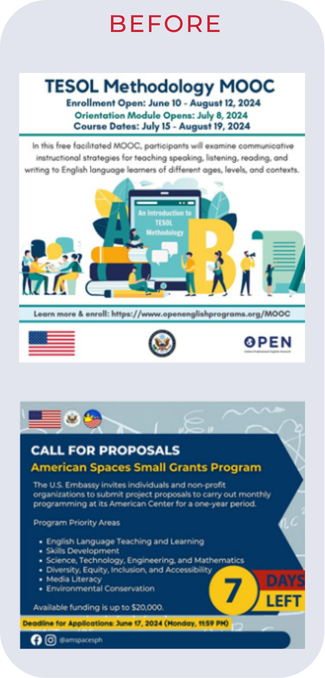
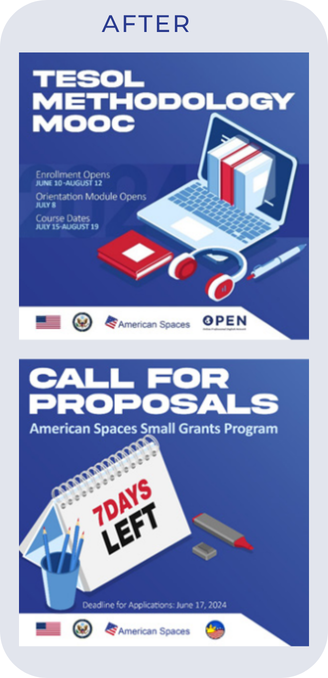
Here are some of the latest design trends for consideration:
TYPEFACE: Use large, bold fonts to make a strong visual impact and convey messages effectively.
Typography choices have a significant impact on accessibility. An accessible font means using a typeface designed for easy reading by a diverse audience, including individuals with visual impairments.
You can use the Americans with Disabilities Act (ADA) guidelines as inspiration. The ADA recommends using sans-serif fonts in certain areas and avoiding italic, decorative, or unusually shaped fonts to ensure readability. It also suggests using high-contrast, easy-to-read characters on display screens.
MINIMALISM: Use simple designs with clean lines and shapes, and leave plenty of white space. Choose soft colors and subtle details to create a sophisticated look.
ANIMATED GRAPHICS: Use GIFs and short animations to capture attention and convey information quickly.
AUTHENTIC IMAGERY: Use real-life and relatable images. Avoid overly staged or stock photos. Encourage and share UGC to build community and trust.
GRADIENTS AND COLOR TRANSITIONS: Use modern gradients and color transitions to add depth and interest to your designs. Incorporate vibrant and bold color schemes to create eye-catching visuals. Use the American Space color palette when possible.
Considering the mentioned trends, the visual communication of American Spaces can be enhanced as follows:
INFLUENCER ENGAGEMENT
Engaging with influencers can be a powerful strategy for American Spaces, but in some countries influencers may have less impact than in others. To ensure that using influencers makes sense for your American Space, assess whether they can extend reach and target engagement.
EXTEND REACH: Influencers have large followings on social media, allowing American Spaces to reach a wider audience.
TARGET ENGAGEMENT: Influencers connect with niche audiences, helping American Spaces to effectively target and engage specific demographics.
Here’s what to keep in mind when collaborating with influencers:
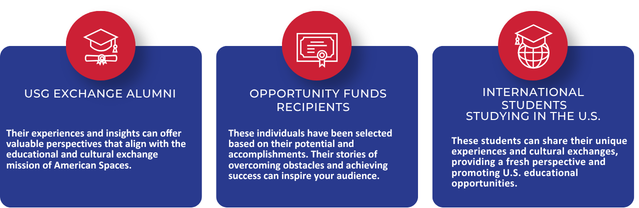
IDENTIFY THE RIGHT INFLUENCERS: Identify influencers in key areas of U.S foreign policy. Ensure that the influencer’s audience aligns with American Spaces’ target audiences. Choose influencers whose values and voice are consistent with your organization to maintain authenticity.
They can be:
RECRUIT INFLUENCERS: Send personalized messages or emails explaining how their involvement can contribute to American Spaces. Provide a clear outline of what they will gain from the partnership, such as increased visibility and the chance to contribute to meaningful initiatives. Propose specific roles like social media takeovers, live Q&A sessions, story-sharing, and event participation.
SET CLEAR OBJECTIVES AND KPIs: Whether it’s increasing brand awareness or promoting a specific campaign, have clear objectives for your influencer engagement efforts. Establish key performance indicators (KPIs) such as reach, engagement, and conversion rates to measure the success of the campaign. Maintain open communication with the influencer to adjust strategies based on performance data and feedback.
DEVELOP A COLLABORATION STRATEGY: Work with the influencer to create a content plan that outlines the type of content to be created, the posting schedule, and key messages. Give influencers creative freedom to ensure the content feels authentic. Negotiate terms and agreements first.
UTILIZE INFLUENCER CONTENT: Share influencer-generated content across American Spaces’ social media channels, website, and other communication materials. Ensure you have the rights to use and repurpose the content created by influencers for broader communication efforts.
TOOLS FOR CONTENT CREATION
The quality and creativity of content play a vital role in capturing audience attention and fostering engagement. Here are some useful tools to assist you in enhancing social media communication efforts:
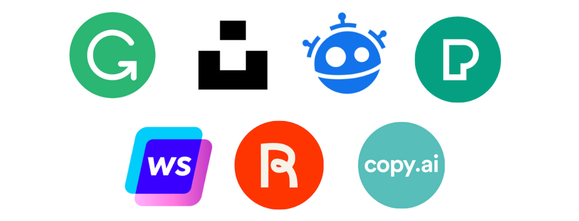
Graphic Design Tools:
CANVA: offers a user-friendly platform with a wide range of design templates, graphics, and tools suitable for creating social media visuals. It’s perfect for beginners and professionals alike.
VECTR: is a free graphic design tool that allows users to create vector graphics easily. Its real-time collaboration feature enables teams to work together on designs, making it ideal for social media visuals, logos, and more.
PIKTOCHART: provides an easy-to-use platform for creating engaging infographics, presentations, and social media graphics for free. With a wide variety of templates and customization options, users can effectively communicate complex information in a visually appealing manner.
CRELLO: offers a vast library of design templates and multimedia elements designed for social media content creation. Users can easily customize templates to suit their branding and messaging needs.
ADOBE CREATIVE CLOUD: includes industry-standard tools like Photoshop, Illustrator, and After Effects for advanced design and animation. They offer a comprehensive suite for all design needs, from image editing to video creation.
Video Editing Tools:
HITFILM EXPRESS: Free video editing software with professional-grade visual effects and composing tools.
ADOBE PREMIERE PRO: Professional video editing software with advanced features for editing, effects, and audio
Photo Editing Tools:
ADOBE LIGHTROOM: Powerful photo editing software with advanced color grading, non-destructive editing, preset filters, cloud storage, and integration with Adobe Creative Cloud.
SNAPSEED: Mobile photo editing app developed by Google with a wide range of editing tools, professional-grade presets, non-destructive editing, and RAW file support.
PIXLR: Online photo editor with basic and advanced editing features, including filters, effects, and overlays.
Photo-Video Resources:
DEPARTMENT OF STATE PHOTOS: Official photos from the U.S. Department of State.
SHAREAMERICA: Managed by the U.S. Department of State, this resource offers photos and videos about American culture, government, and society. The content is available for public use.
LIBRARY OF CONGRESS: Photos, prints, and posters from the Library of Congress that are free to use.
SMITHSONIAN OPEN ACCESS: This resource includes access to nearly 3 million 2D and 3D digital items from the Smithsonian. This includes images and data from across the Smithsonian’s 19 museums, nine research centers, libraries, archives, and the National Zoo.
WIKIMEDIA COMMONS: The web’s largest repository of searchable, freely-downloadable high-quality photography on a variety of subjects. Be sure to follow the photographers’ attribution requirements and avoid the use of content with little or no self-documentation.
NASA’S MEDIA LIBRARY: NASA’s media library includes a rich selection of space-related photos and videos, many of which are in the public domain and free to use.
DVIDS: Images and video produced by the U.S. military.
WHITE HOUSE PHOTOS: Official photos from the White House.
Stock Photo-Video Resources:
UNSLASH: Community-driven platform offering high-resolution, royalty-free images for personal and commercial use.
PEXELS: Platform offering free stock photos and videos contributed by photographers and videographers worldwide.
FREEPIK: Offering a wide range of free and premium resources, including stock images, as well as vectors, icons, and PSD files.
SI-powered Copywriting Tools:
COPY.AI: SI-powered copywriting tool for generating marketing copy, blog posts, social media content, and more.
WRITESONIC: SI copywriting tool for generating marketing copy, ad headlines, blog posts, etc., using natural language processing (NLP) technology.
RYTR: SI writing assistant for creating blog posts, social media content, and email newsletters with customizable templates and writing styles.
Writing Enhancement Tools:
GRAMMARLY: Grammar editing tool that checks spelling, grammar, punctuation, and style, offering suggestions for improvement.
STAFF TRANSITIONS
Maintaining uninterrupted access to your social media accounts is crucial to your ability to message effectively to your audiences. Identify a colleague who can immediately manage all social media accounts when an American Spaces coordinator leaves their position. Do this long before the staff transition begins. You can avoid interruptions and gaps in messaging by taking the following steps:
- Create a list of all social media accounts the coordinator has access to, even if they do not use them regularly. For each account, include the username and password, multi-factor authentication methods, and user role, such as admin. Include any paid subscriptions the coordinator has access to, such as Canva.
- Check the primary email address and recovery email addresses for all accounts. Be sure that the social media backup team can access those email accounts.
- After the coordinator has left the position, after any necessary changes have been made to the user roles, passwords, email addresses, or other details, revoke their account access.
- Regularly review who has access to your social media accounts, and their level of permission.
PLATFORM OPTIMIZATION RESOURCES
Social media platforms frequently update their interfaces, tools, and policies. To keep this guide up-to-date, platform-specific instructions are not included. American Spaces coordinators are encouraged to refer to the official platform guidelines for account setup and management.



FACEBOOK PAGE HELP CENTER:
Guidance on creating and managing Facebook Pages, optimizing engagement, and accessing best practices and tips for effective content publishing and audience interaction.
INSTAGRAM HELP CENTER:
Guidance on professional accounts, publishing posts, Stories, and Reels, including best practices and practical tips for improving reach, engagement, and visual storytelling.
LINKEDIN HELP CENTER:
Resources for creating and managing LinkedIn Pages, sharing organizational updates, and accessing recommendations and best practices for professional communication and audience growth.
X HELP CENTER:
Information on posting features, community engagement tools, and platform policies, as well as guidance and posts on improving visibility and interaction with audiences.
YOUTUBE CREATOR HELP CENTER:
Guidance on channel creation, video publishing, analytics, and audience engagement, including best practices for developing effective video content and growing a subscriber base.
WHATSAPP BUSINESS HELP CENTER:
Information on setting up and managing WhatsApp Business accounts, messaging tools, and communication features, along with practical guidance on best practices for interacting with audiences.
SOCIAL MEDIA ADVERTISEMENT
Social media advertising enables American Spaces to extend their reach beyond organic followers and target specific audiences with greater precision and impact. Since advertising tools, formats, and policies evolve frequently across platforms, American Spaces coordinators are encouraged to consult the official ad centers listed below for the most current guidance on campaign setup and management.
FACEBOOK ADS MANAGER:
The central hub for creating, managing, and analyzing paid campaigns on Facebook. Supports a range of ad formats, including image, video, carousel, and Stories ads, robust audience targeting options by location, age, interests, and behavior. Especially effective for promoting events, programs, and boosting high-performing organic posts to reach new audiences.
INSTAGRAM ADS:
Guidance on running paid promotions on Instagram, including photo, video, carousel, Stories, and Reels ads. Instagram ads are managed through Meta Ads Manager but offer Instagram-specific placements and creative formats. Particularly effective for reaching younger audiences and showcasing visual content from American Spaces programs and events.
LINKEDIN CAMPAIGN MANAGER:
Resources for running Sponsored Content, Message Ads, and Dynamic Ads targeting professionals by industry, job title, seniority, and educational background. Particularly effective for reaching Established Opinion Leaders, academics, and civil society professionals aligned with American Spaces’ priority audiences.
X ADS:
Guidance on Promoted Posts, Follower Campaigns, and Trend Takeovers for amplifying timely, concise messaging around U.S. foreign policy topics, program announcements, and public diplomacy priorities. Useful for joining real-time conversations and increasing visibility around trending topics.
YOUTUBE ADS:
Information on video ad formats, including skippable in-stream ads, non-skippable ads, and bumper ads to amplify video content and reach audiences interested in education, cultural exchange, and American innovation. Integrates with Google Ads for advanced targeting and analytics.
GOOGLE ADS (SEARCH & DISPLAY):
Resources for running search and display advertising campaigns that can drive traffic to American Spaces pages and event registration pages. Google Ads also manages YouTube advertising campaigns and provides access to performance analytics across the Google ecosystem.
PLATFORM POLICIES

COMPLY WITH COPYRIGHT LAWS:
Respect intellectual property rights and adhere to copyright laws when sharing content on American Spaces’ social media platforms. Obtain proper permissions or licenses for third-party content and refrain from using copyrighted material without authorization to avoid potential legal consequences.
PROMOTE TRANSPARENCY:
Maintain transparency in American Spaces’ social media activities by clearly disclosing any sponsored content, partnerships, or affiliations. Use appropriate tags, labels, or disclosures to indicate sponsored posts, paid promotions, or affiliate relationships.
UPHOLD COMMUNITY GUIDELINES:
Adhere to community guidelines established by social media platforms to maintain a positive and respectful online environment for American Spaces’ audiences. Avoid engaging in or endorsing behavior that violates community standards, such as harassment, hate speech, or the dissemination of harmful content.
ENSURE CONTENT INTEGRITY:
Maintain the integrity of American Spaces’ content by ensuring its accuracy and relevance to your audience. Avoid sharing misleading or deceptive information, and fact-check content before posting to mitigate the spread of foreign misinformation or false claims.
RESPECT ADVERTISING STANDARDS:
When running advertising campaigns on American Spaces’ social media platforms, ensure compliance with advertising standards and guidelines. Create ads that are truthful, transparent, and compliant with relevant laws and regulations, and avoid promoting illegal services or using discriminatory targeting practices.
PROTECT USER PRIVACY:
Respect user privacy rights and adhere to data protection laws and regulations when storing or processing personal data obtained through social media interactions.
MONITOR AND RESPOND:
Regularly monitor your social media channels for compliance with platform policies and community guidelines. Promptly address any violations or concerns raised by users and take appropriate action to rectify issues or remove offending content as needed. Understanding and adhering to these platform policies not only protects American Spaces from legal risks but also enhances your credibility and trustworthiness in the eyes of your audience.
CAPACITY BUILDING
This section provides a curated list of recommended courses and sources from verified and globally recognized platforms for expanding your knowledge and expertise in social media management.
Platforms that offer free certification but require a subscription for full access to some courses:
PLATFORM: LINKEDIN LEARNING
Courses:
Social Media Marketing – Strategy and Optimization: Covers the basics of social media strategy development and optimization.
Content Marketing – Strategy, Planning, and Execution: Practical strategies for creating and executing a content marketing plan.
PLATFORM: GOOGLE DlGITAL GARAGE
Courses:
Fundamentals of Digital Marketing: Includes modules on social media marketing.
Promote a Business with Online Advertising: Covers social media advertising, among other digital advertising techniques.
PLATFORM: META BLUEPRINT
Courses:
Facebook Certified Digital Marketing Associate: Covers foundational advertising concepts on
Facebook and Instagram.
Facebook Certified Marketing Science Professional: Focuses on data-driven marketing strategies on Meta platforms.
PLATFORM: COURSERA
Courses:
Social Media Marketing Specialization: Offered by Northwestern University, covering social media marketing, analytics, and engagement.
Digital Marketing Specialization: Offered by the University of Illinois, includes social media marketing modules.
PLATFORM: SIMPLILEARN
Courses:
Advanced Social Media Certification Program: Covers advanced social media strategies and analytics. Digital Marketing Specialist: Comprehensive program including social media marketing.
Industry Resources
SOCIAL MEDIA EXAMINER: Offers in-depth articles, research reports, podcasts, and webinars on the latest social media trends, strategies, and tools.
HUBSPOT BLOG: Offers comprehensive articles on digital marketing, social media strategies, SEO, content marketing, and more.
BUFFER BLOG: Offers insights on social media marketing, case studies, industry trends, and practical advice on managing social media platforms.
HOOTSUITE BLOG: Offers guides, tips, and insights on social media management, analytics, and advertising across various platforms.
SPROUT SOCIAL INSIGHTS: Offers articles on social media analytics, industry trends, best practices, and success stories