SPACE EXPLORATION
PROGRAM TOOLKIT FOR AMERICAN SPACES
This program toolkit is designed for programming at American Spaces to showcase the history of U.S. excellence and leadership in space exploration.
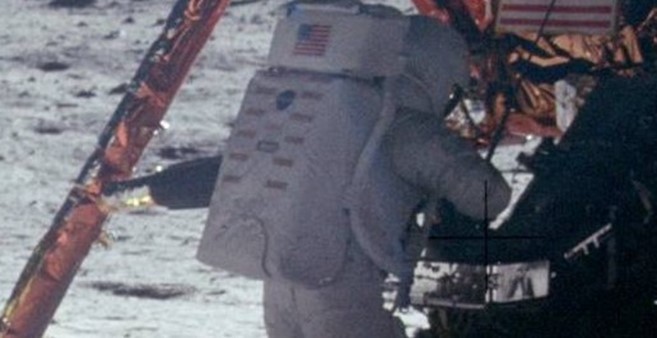
“That’s one small step [a] for man – one giant leap for mankind.”
Astronaut Neil Armstrong, on becoming the first human to step on the Moon.
FOR VIEWING
8 Days: To the Moon and Back | Kanopy* (89 minutes)
News footage, NASA archival content, and computer-generated imagery combine to tell the story of the historic Apollo 11 mission. Features conversations between Neil Armstrong, Buzz Aldrin, and Michael Collins.
A Place Beyond the Sky: Chasing The Moon | Kanopy* (114 minutes)
Starting in 1957, this PBS documentary tracks the early years of the space race between the United States and the Soviet Union.
Armstrong: The Life of Astronaut Neil Armstrong | Kanopy* (99 minutes)
The life story of Neil Armstrong: from his childhood in rural Ohio, through military service in the Korean War, to his first steps on the Moon. Narrated by Oscar-nominated actor Harrison Ford.
Chasing The Moon: Investigating the Space Age | Kanopy* (5 hours and 40 minutes – 3 parts)
This PBS documentary features previously overlooked and lost archival material to tell the story of U.S. innovation in space exploration during the 1960s.
Cosmic Dawn: The Untold Story of the James Webb Space Telescope | Kanopy* (96 minutes)
Go behind the scenes with NASA to see the immense challenges, groundbreaking innovations, and extraordinary efforts behind humanity’s most powerful eye on our universe.
Earthwise: Chasing the Moon | Kanopy* (113 minutes)
1964-1968 were four dangerous years in the history of the space race. This PBS documentary traces the Apollo 1 and Apollo 8 missions.
JPL and the Space Age | Kanopy* (15 episodes, 50-90 minutes each)
This documentary shares archival footage and interviews with NASA Jet Propulsion Laboratory’s pioneering engineers and scientists, who were crucial players in Americans’ first trips into space.
Listen to the Universe | Kanopy* (26 minutes)
This NASA documentary brings you the team that creates sonifications: translations of data into sound and explains how meaningful they are to people who are blind or low-vision.
Moonbound: The Artemis II Mission | Kanopy* (58 minutes – two parts)
Learn how the Artemis II test flight successfully circled the Moon with four astronauts, setting the stage for future lunar exploration.
Planetary Defenders | Kanopy* (75 minutes)
How would humanity respond if we discovered an asteroid headed for Earth? This NASA documentary explores the high-stakes world of asteroid detection and planetary defense.
To an Asteroid and Back | Kanopy* (109 minutes)
Follow NASA’s OSIRIS-Rex team as they launch a spacecraft to an asteroid, collect a sample of Bennu, and bring it home to Earth.
ADDITIONAL RESOURCES
ShareAmerica
WHY EXPLORE SPACE?
Humanity has always been fascinated by the heavens. Humans are driven to explore the unknown, discover new worlds, and expand our scientific and technical limits. This desire to explore and challenge the boundaries of what we know has provided benefits to our society for centuries. Human space exploration helps address fundamental questions about our place in the universe and the history of our galaxy and solar system. Through addressing the challenges related to human space exploration, we expand technology, create new industries, and help foster peaceful connections with other nations. Curiosity and exploration are vital to the human spirit and accepting the challenge of going deeper into space invites citizens of the world to work together on the exciting journey.
CURRENT NASA SPACE PROGRAMS
PEACEFUL SPACE EXPLORATION
DISCUSSION QUESTIONS
- What role does NASA play in space exploration?
- Why is NASA’s work important to you and your country?
- How can space exploration build peace between countries?
- How does the Artemis Program showcase American values and innovation?
- The White House selected several American Heroes who were instrumental in space exploration, such as Neil Armstrong, Edwin Hubble, Mary Jackson, Katherine Johnson, Christa McAuliffe, Sally Ride, Alan Shepard, and Dorothy Vaughan. Why do you think they were selected as heroes?
SPACE-RELATED FIELDS AT U.S. UNIVERSITIES
Many U.S. universities offer degree programs in fields related to space exploration. EducationUSA, a U.S. Department of State network of international student advising centers in more than 170 countries, can help prospective university students identify those opportunities.
GLOSSARY
The Universe – The universe is all of space and time and their contents, including planets, stars, galaxies, and all other forms of matter and energy.
Solar System – the collection of eight planets and their moons in orbit around the sun, together with smaller bodies in the form of asteroids, meteoroids, and comets. The planets of the solar system are (in order of distance from the sun) Mercury, Venus, Earth, Mars, Jupiter, Saturn, Uranus, and Neptune.
Constellation – a group of stars that form a pattern in the sky.
Astrobiology – the study and search for life in the universe.
The views expressed in these links and resources do not necessarily reflect those of the U.S. government.
* Post may need to procure these films. Not all films are appropriate for all audiences. Coordinators should preview films before showing them. American Spaces have the right to screen Kanopy films (available through eLibraryUSA) at their American Space if the film has public performance rights. Other films must be covered by the MPLC license. Here is more information on showing films at American Spaces.
Updated May 2026