ELEANOR ROOSEVELT
PROGRAM TOOLKIT FOR AMERICAN SPACES
This toolkit is designed for programming at American Spaces, and to discuss Eleanor Roosevelt’s role in modern diplomacy.
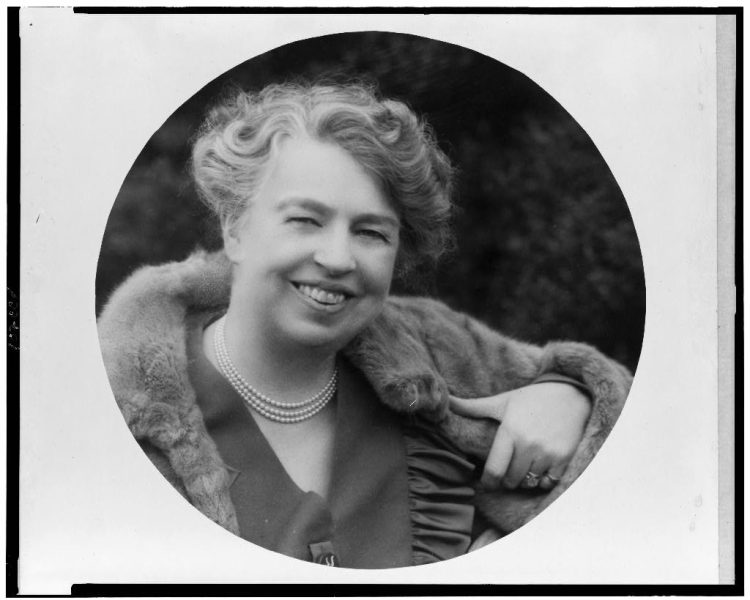
Eleanor Roosevelt at the United Nations, circa 1946-1947.
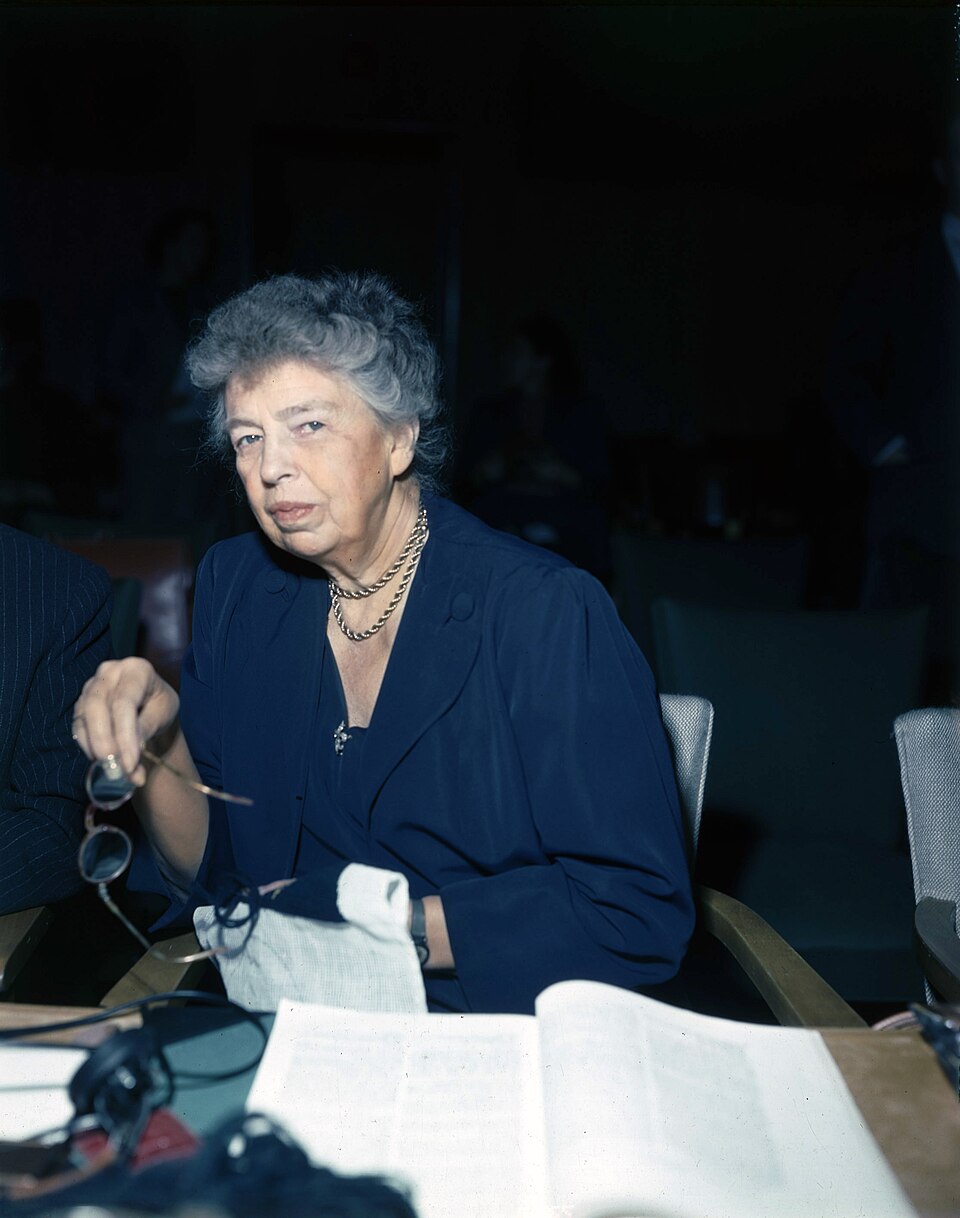
Eleanor Roosevelt, circa 1945.
RESOURCES
Videos and Digital Media
- A Conversation with Eleanor Roosevelt | Franklin D. Roosevelt Presidential Library and Museum on YouTube (29 minutes) – Interview with Roosevelt that highlights such themes as personal values, her United Nations work, and women’s suffrage.
- Eleanor Roosevelt’s Address to the United Nations | United Nations Association of the USA on YouTube (1 minute) – Archival footage of Roosevelt’s speech announcing the Universal Declaration of Human Rights.
- Eleanor Roosevelt: Her Life in Pictures | Franklin D. Roosevelt Presidential Library and Museum on YouTube video (15 minutes) – Roosevelt reflects on her life as she looks at photos from her past.
- Eleanor Roosevelt Papers Project | George Washington University – Comprehensive archive of Roosevelt’s newspaper columns, radio and television appearances, and speeches.
Articles
- Eleanor Roosevelt Biography – National Park Service
- Eleanor Roosevelt and the Universal Declaration of Human Rights – National Park Service
- Eleanor Roosevelt Facts – Franklin D. Roosevelt Presidential Library and Museum
- U.S. Support for Human Rights Defenders – U.S. Department of State
INTRODUCTION
Eleanor Roosevelt (1884–1962) transformed the role of the First Lady from a social hostess to a powerful political force. After leaving the White House, she became a delegate to the United Nations, where she chaired the committee that drafted the Universal Declaration of Human Rights (UDHR). This toolkit explores her legacy in civic engagement, leadership, and international law.
KEY DEFINITIONS
- Delegate: A person sent or authorized to represent others, in particular an elected representative sent to a conference.
- Human rights: Rights inherent to all humans, regardless of race, sex, nationality, ethnicity, language, religion, or any other status.
- My Day: Eleanor Roosevelt’s newspaper column, which she wrote six days a week from 1935 to 1962, allowing her to speak directly to the American people.
- Universal Declaration of Human Rights (UDHR): A foundational document of international human rights law adopted by the United Nations in 1948.
BACKGROUND INFORMATION
Eleanor was born into a wealthy but troubled family. Her uncle was Theodore Roosevelt, 26th president of the United States. She married her distant cousin, Franklin D. Roosevelt (FDR), in 1905. When FDR was stricken with polio, Eleanor began traveling the country to keep his political career alive, discovering her own passion for social reform. As First Lady (1933-1945), she championed civil rights and workers’ rights. President Harry S Truman later called her the “First Lady of the World” for her humanitarian achievements at the United Nations. Her commitment to helping others is commemorated on a U.S. Mint gold coin.
LESSON PLANS
Eleanor Roosevelt and Diplomacy | Franklin D. Roosevelt Presidential Library and Museum
Twelve activities to learn about diplomatic skills.
Eleanor Roosevelt – First Lady, Diplomat, and Activist | PBS Learning Media
Through two primary source activities and a short video, students will learn how Eleanor Roosevelt used her positions as First Lady and United Nations diplomat to serve the public.
Eleanor Roosevelt Papers Project | George Washington University
Case studies and lesson plans for audiences of all ages that highlight Roosevelt’s relationships with other famous Americans and her United Nations work.
DISCUSSION QUESTIONS
- Eleanor Roosevelt famously said, “Where, after all, do universal human rights begin? In small places, close to home.” What does this quote mean to you in the context of your local community?
- How did Eleanor Roosevelt use media (radio and newspaper columns) to overcome traditional political barriers? How does this compare to social media use by leaders today?
- Why was it significant that she insisted only female reporters attend her White House press conferences?
- Why do you think Eleanor Roosevelt was selected by the White House as an American Hero? What made her a hero?
DISCLAIMER
The views expressed in these links and resources do not necessarily reflect those of the U.S. government.
Updated April 2026